
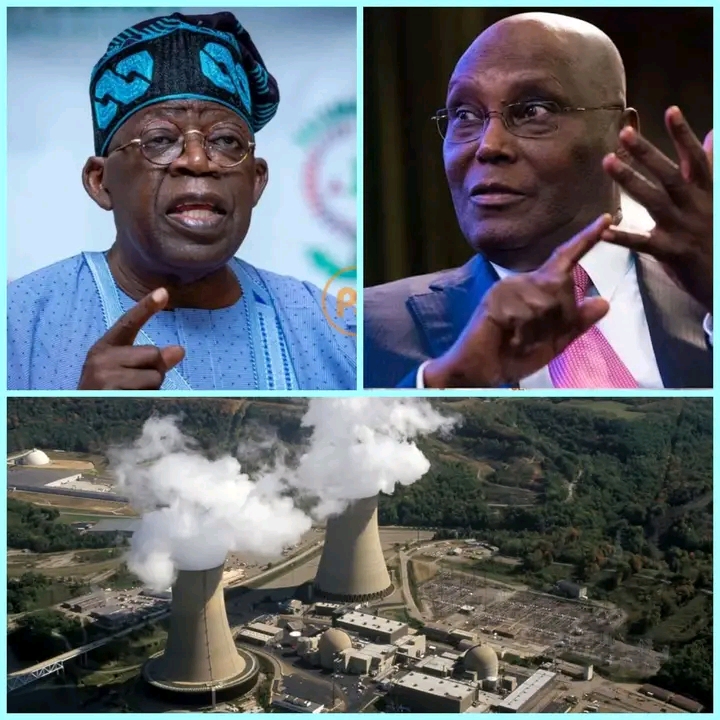
The 2027 presidential candidate of the African Democratic Congress (ADC) and former Vice President, Atiku Abubakar, has unveiled a new petroleum subsidy model aimed at shifting government support from fuel importers to Nigerian refineries.
According to a statement issued by his Senior Special Assistant on Public Communication, Phrank Shaibu, the proposal is contained in the Atiku Economic Recovery Plan (AERP 2027), which seeks to replace what Atiku described as the current failed import-subsidy structure with a targeted, transparent and time-bound production subsidy.
The plan, he said, is designed to reduce energy costs, accelerate domestic refining and ensure that government intervention delivers measurable benefits to Nigerians.
“My proposal is not to resurrect the old subsidy regime. We will move subsidy from importation to production, from middlemen to Nigerian refineries, and from unverifiable claims to verifiable barrels. The principle is simple: the subsidy will follow the barrel,” Atiku said.
Under the proposed model, qualifying public and private refineries in Nigeria would receive domestic crude oil at a preferential price, subject to strict conditions relating to output, efficiency and domestic supply.
Atiku said the government would be required to openly account for the opportunity cost of the intervention, adding that the cost, ceiling and beneficiaries of the subsidy would be made known.
“The cost will be known. The ceiling will be known. The beneficiaries will be known. And, most importantly, the benefit delivered to Nigerians will be measurable.
“We will determine what Nigeria can afford before we subsidise. We will not subsidise first and discover the bill afterwards,” he said.
He explained that no refinery would receive subsidised crude without supplying an independently verified volume of refined products to the Nigerian market at a price that reflects the benefit of the subsidy.
According to him, crude allocations, refinery intake, production yields, inventories and product deliveries would be reconciled to ensure that every subsidised barrel could be traced from the wellhead to the pump.
“There will be no phantom cargoes, fictitious imports, unverifiable under-recoveries or retrospective claims.
“If you receive subsidised Nigerian crude, you must refine it in Nigeria, supply the agreed products to Nigerians and pass the benefit to Nigerians. Otherwise, you do not qualify,” Atiku stated.
He said eligibility for the programme would be based on clear rules and would be open to all qualifying refineries, with allocations determined by verified capacity and performance rather than political connections.
He added that any operator found diverting subsidised crude or petroleum products, falsifying records or failing to pass the benefits to consumers would lose eligibility, refund the subsidy and face appropriate sanctions.
“Nigeria will not subsidise anybody’s private profit. Public support must produce a measurable public benefit,” he said.
Atiku further proposed that the subsidy should operate within a fixed annual fiscal ceiling approved by the National Assembly to prevent open-ended government liabilities.
“No refinery gets unlimited support. No marketer brings government a surprise bill. No agency manufactures an under-recovery after the transaction.
“The National Assembly will see the appropriation. Nigerians will know the maximum exposure. Independent auditors will see the barrels, and the public will see what was produced for every naira of support,” he said.
The former vice president said the proposed programme would also contain statutory sunset clauses, which would gradually reduce subsidy as domestic refining capacity expands and production costs decline.
“Our objective is not permanent subsidy. It is to use temporary and disciplined support to build a refining industry strong enough eventually not to need subsidy,” he explained.
Atiku also criticised President Bola Tinubu over the declaration on May 29, 2023, that fuel subsidy had been removed, arguing that subsidy-like costs subsequently resurfaced in government accounts.
He cited NNPC Limited’s audited statements, which he said showed ₦4.84 trillion in “Energy Security Expenses” in 2023 and ₦7.13 trillion in 2024.
“You cannot abolish subsidy at Eagle Square and allow subsidy-like costs to resurface in government accounts without explaining the contradiction.
“Nigerians cannot pay for subsidy removal twice—through punishing pump prices and through unexplained subsidy-like costs against their commonwealth,” Atiku said.
He also called for a comprehensive reconciliation of approximately ₦30 trillion reflected across Federation revenues, deductions, savings, transfers and related classifications.
Atiku, however, clarified that he was not claiming that the entire ₦30 trillion represented fuel subsidy, but insisted that the funds required a complete month-by-month public reconciliation.
“We are not saying ₦30 trillion is fuel subsidy. We are saying that approximately ₦30 trillion reflected across Federation revenues, deductions, savings, transfers and related classifications requires a complete, month-by-month public reconciliation,” he said.
Atiku concluded by contrasting his proposed approach with the Tinubu administration’s handling of subsidy removal.
“Tinubu’s approach was: announce first, impose the pain immediately and explain the accounts later.
“Ours will be: define the intervention, establish the ceiling, appropriate the money, track the crude, verify the production, guarantee the consumer benefit, publish the accounts and progressively reduce the subsidy.
“That is the Atiku alternative: target it, cap it, budget it, track it, audit it, make Nigerians feel the benefit, reduce it as domestic production grows and ultimately end the need for it altogether,” he stated.
