
By Kabiru Basiru Fulatan
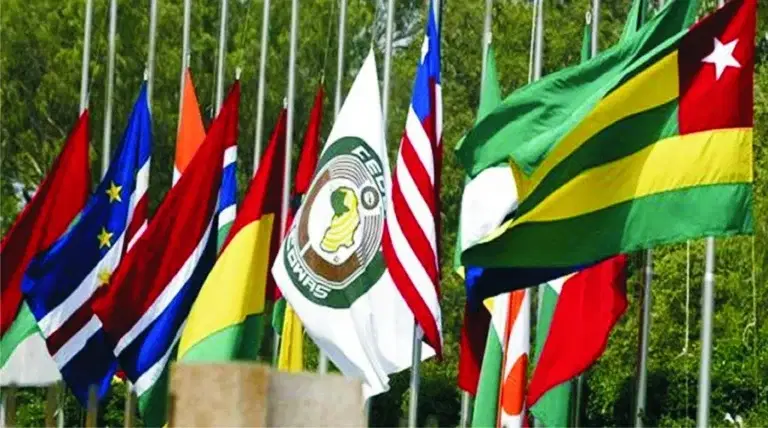
For months, conversations have intensified across Nigeria and the wider West African region over reports that a new regional currency—the Eco—could begin rolling out from 2027 under the Economic Community of West African States (ECOWAS). While ECOWAS has reaffirmed its commitment to the 2027 target, there has been no official announcement that Nigeria will abolish the naira in 2027. The transition, if it eventually happens, depends on member states meeting strict economic conditions and further political agreements.
Regardless of when it happens, the discussion raises an important question: Is Nigeria truly ready for such a historic monetary transition?
A common regional currency promises to transform trade and economic cooperation across West Africa. Businesses would no longer need to exchange currencies when trading across borders, transaction costs could fall, and investors might find the region more attractive. For a country like Nigeria—the region’s largest economy—these opportunities could be significant.
However, the promise comes with equally serious challenges.
Nigeria continues to grapple with inflation, exchange-rate volatility, high unemployment and pressure on household incomes. Economic experts have long argued that a successful monetary union requires member countries to maintain stable inflation, prudent fiscal management and sustainable public debt. Without meeting these convergence criteria, a shared currency could create more problems than solutions.
The banking sector would also face a massive adjustment. Commercial banks, fintech companies, payment platforms and businesses would need to upgrade their systems, retrain staff and educate millions of customers. ATMs, point-of-sale terminals, accounting software and online payment systems would all require extensive modifications.
For ordinary Nigerians, the biggest concern is likely to be understanding the new currency. Many still remember the confusion that accompanied the 2022–2023 naira redesign. Introducing an entirely new regional currency would require nationwide public education to prevent misinformation, fraud and panic.
Small businesses may feel the pressure most. Market traders, transport operators and rural entrepreneurs would need time to understand new pricing systems and exchange values. Without proper awareness campaigns, consumers could become vulnerable to exploitation during the transition.
Government institutions would equally have enormous responsibilities. Beyond changing banknotes and coins, authorities would need to review financial regulations, taxation systems, public procurement procedures and accounting standards. Schools, universities and professional institutions would also need to update their teaching materials.
Another key issue is public confidence. A currency derives its strength not only from economic indicators but also from people’s trust. Citizens must believe that the new monetary system will preserve the value of their earnings and savings while making everyday transactions easier rather than more complicated.
Technology will play a decisive role. Nigeria has made significant progress in digital payments, mobile banking and financial technology, but internet access, electricity supply and cybersecurity remain important concerns. A modern regional currency system will demand resilient digital infrastructure capable of serving millions of users securely and efficiently.
There is also a political dimension. A common currency requires participating countries to coordinate monetary and fiscal policies closely. That means national governments may have to surrender part of their independent control over monetary policy in favour of regional institutions—a sensitive issue for many sovereign states.
Perhaps the most important lesson is that readiness extends beyond governments and central banks. Businesses, financial institutions, civil society organisations and ordinary citizens all have vital roles to play. Public awareness campaigns, financial literacy programmes and transparent communication will be essential in ensuring that any future transition proceeds smoothly.
As 2027 approaches, one fact remains clear: while ECOWAS continues to pursue the Eco project, Nigeria has not officially announced that the naira will disappear in 2027. The implementation depends on regional agreements and the ability of participating countries to satisfy agreed economic benchmarks.
Whether the Eco arrives in 2027 or later, the debate should encourage Nigerians to prepare for the future by strengthening economic institutions, improving financial literacy and building public confidence.
The real question, therefore, is not simply whether a new currency is coming—but whether Nigeria is building the economic foundation needed to make such a transition successful when the time finally comes.
